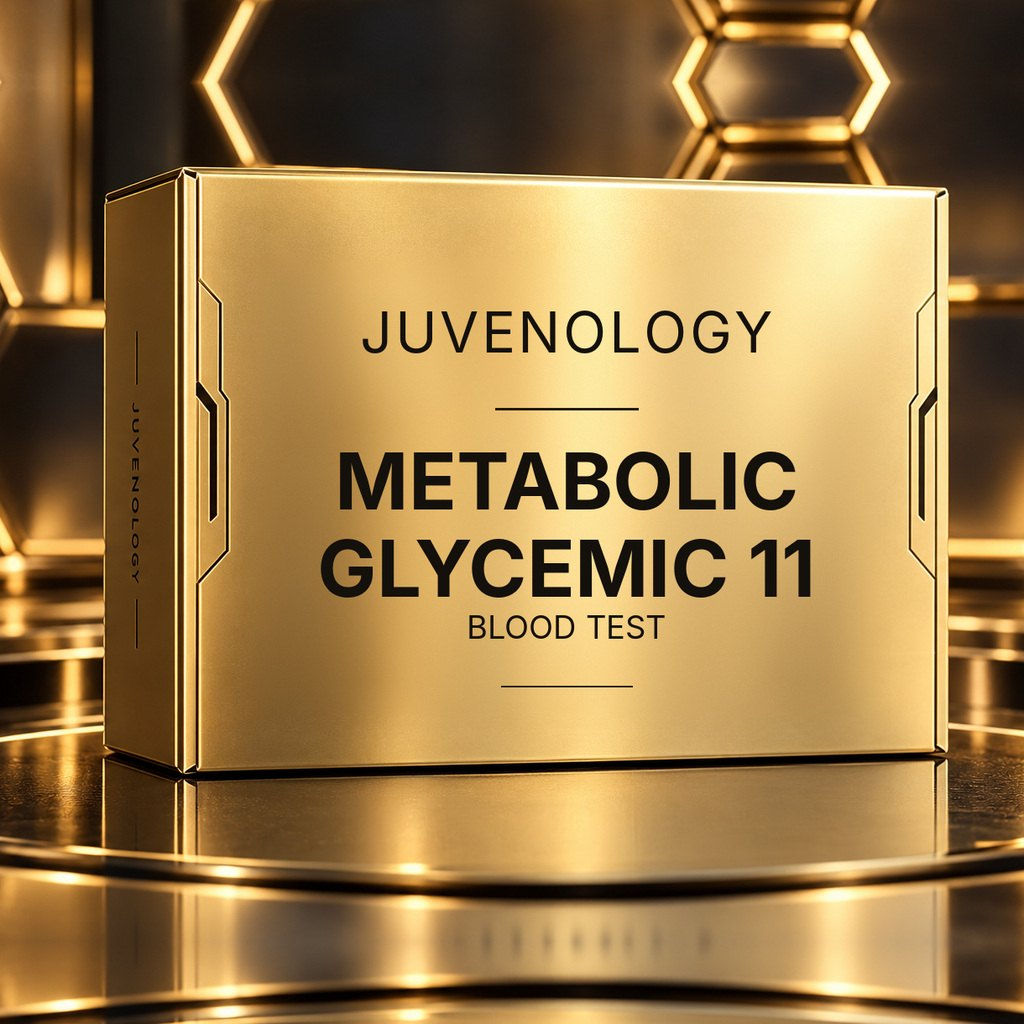
The Metabolic Glycemic 11 Blood Test measures three markers of blood sugar control: HbA1c, glucose and insulin. Despite the number in its name, it contains these three tests only. Each covers a different time frame: HbA1c reflects the previous two to three months, while glucose and insulin show the moment of sampling.
Results can fall in the higher-risk or diabetic range, but a diagnosis is made by a clinician, usually after confirmatory testing.
What is measured
- HbA1c: glucose attached to haemoglobin, reported in mmol/mol
- Glucose: blood glucose after an overnight fast
- Insulin: the hormone that lowers blood glucose, measured fasting
Useful for
- Checking glycaemic status if you have risk factors for type 2 diabetes
- Following up a previous borderline result, with your GP aware
- Seeing long-term and same-day glucose measures side by side
Sample: fasting venous blood. Biomarkers: three. Price includes: laboratory analysis and the laboratory's results report with reference ranges. Interpretation is optional and priced separately.
Metabolic Glycemic 11
- HbA1c (measured): glycated haemoglobin in mmol/mol (IFCC units).
- Glucose (measured): blood glucose at sampling; interpreted as a fasting value.
- Insulin (measured): fasting insulin, read alongside glucose.
No calculated values are listed. Some services derive a HOMA-IR score from glucose and insulin; it is a research tool and is not part of this panel. An oral glucose tolerance test, lipids and kidney tests are not included.
How blood glucose is controlled
After a meal, glucose enters the blood and the pancreas releases insulin, which lets muscle, fat and liver cells take it up and tells the liver to stop releasing its stores. Overnight, insulin falls and the liver releases glucose to keep levels steady.
In insulin resistance, tissues respond less well, so the pancreas produces more insulin to keep glucose normal. If production cannot keep up, glucose rises, first after meals and then fasting, and HbA1c rises with it. This gradual course is why type 2 diabetes can be present for some time without symptoms.
Three tests, three time frames
HbA1c forms when glucose attaches to haemoglobin. Red cells live around 120 days, so HbA1c reflects average glucose over two to three months and is unaffected by a single meal. A 2011 WHO consultation accepted it as a diagnostic test for diabetes, provided assays are standardised and nothing prevents accurate measurement.
Glucose is a single-moment reading; fasting makes it comparable with established thresholds.
Insulin is used in specialist settings, for example to investigate low blood glucose. Its use to assess insulin resistance in individuals is debated because assays are not standardised.
HbA1c
- 48 mmol/mol (6.5%) or above: the WHO cut-off for diagnosing diabetes. In UK practice, a result in this range without symptoms is usually confirmed with a repeat test.
- 42–47 mmol/mol: used by NICE (PH38) to identify high risk of type 2 diabetes, sometimes called non-diabetic hyperglycaemia or prediabetes.
- Below 42 mmol/mol: below the high-risk range, though WHO notes a value below the diagnostic cut-off does not exclude diabetes diagnosed by glucose tests.
Because HbA1c depends on red cell lifespan, it can be misleading with anaemia (including iron deficiency), some haemoglobin variants, recent blood loss or transfusion, kidney disease and pregnancy.
Glucose
A fasting glucose of 7.0 mmol/L or above is in the diabetic range, and NICE PH38 uses 5.5–6.9 mmol/L to identify high risk. A non-fasting result cannot be compared with these thresholds. Illness, stress and medicines such as steroids can raise glucose temporarily.
Insulin
There is no agreed decision threshold for fasting insulin, and results vary between laboratories, so repeats should use the same laboratory. UK laboratory guidance describes measuring insulin to assess insulin resistance as controversial, and the international PCOS guideline advises against insulin assays in routine care. Weight, waist size, blood pressure, lipids and glucose-based tests are the usual measures of metabolic risk.
If your HbA1c or glucose is in the high-risk or diabetic range, we will advise you to see your GP, who can confirm it. With your consent, Juvenology can write to your GP. If you have diabetes, do not change your treatment on the basis of this test.
Raised glucose below the diabetic range is an opportunity to act early on diet, activity and weight with GP support. Factors that make raised glucose more likely include:
- a parent or sibling with type 2 diabetes
- excess weight, particularly around the waist
- South Asian, Chinese, African-Caribbean or Black African family background
- diabetes in a previous pregnancy, or polycystic ovary syndrome
In England, adults aged 40 to 74 can have a free NHS Health Check, and people at high risk can be referred by their GP to the NHS Diabetes Prevention Programme. This panel does not replace NHS care.
May be useful if
- you have risk factors for type 2 diabetes
- you want to follow up a previous borderline result
- you had gestational diabetes or have polycystic ovary syndrome and want an interim check
May not be the right choice if
- you have marked thirst, passing a lot of urine, unexplained weight loss or blurred vision: see your GP promptly
- you are vomiting, drowsy or breathing fast: seek urgent care through NHS 111 or 999
- you are pregnant: glucose testing follows a maternity pathway
- you have diabetes: monitoring belongs with your diabetes team
Established: the risk of type 2 diabetes rises with age, and HbA1c and fasting glucose are the standard tests for identifying it. NICE supports finding people at high risk so lifestyle support can start earlier.
Associations: higher HbA1c is associated with cardiovascular disease at population level. This does not mean lowering a normal HbA1c changes an individual's outcome, and there are no evidence-based "optimal" HbA1c targets for people without diabetes.
Emerging research: insulin resistance is studied as a link between metabolism and age-related disease, but tools such as HOMA-IR describe groups better than individuals. This panel does not measure metabolic age.
- Fasting: at least 8 hours, water only, unless the laboratory advises otherwise. Avoid tea, coffee, juice and chewing gum.
- Timing: a morning appointment makes fasting easier. Eat your usual evening meal the night before.
- Exercise: avoid strenuous exercise that morning.
- Medicines: take regular medicines as normal and tell us what you take. If you take diabetes medicines, do not fast or change doses without your diabetes team's advice.
- Health factors: tell us about anaemia, a haemoglobin variant, kidney disease, recent blood loss or transfusion, or current illness.
Choose how your sample is taken when you book. We confirm the collection option, any collection fee and the expected turnaround time before you book.
- Juvenology Clinic, Maidstone (82 King Street, Maidstone ME14 1BH): Available.
- Partner collection location, including London: Available on request. We confirm availability for your postcode before you book.
- Postal home finger-prick kit: Not available for this test.
Sample: Venous blood sample (whole blood for HbA1c; glucose and insulin sample types as confirmed by the laboratory)
Collection notes: Fast for at least 8 hours (water only); a morning appointment is easiest. Not offered as a postal kit because glucose falls in unprocessed samples and insulin degrades with haemolysis or delayed separation.
The price of this test covers laboratory analysis and the laboratory's results report. The report lists each result beside the laboratory's reference range.
Beyond the blood test: optional support, priced separately
- Personalised written interpretation report: £50
- General consultation: £50
- Results consultation (results discussion and follow-up advice): £100
- Personalised programme: from £150, after we assess whether a programme suits you
Consultations are with Marina, an NMC-registered nurse with an Executive MSc in Longevity from the Geneva College of Longevity Science. She explains what your results show and how they relate to lifestyle. No prescription service is offered with these tests.
If a result suggests you need medical follow-up, we will recommend that you see your GP and, with your consent, can provide a letter to take with you. A blood test cannot rule out every condition. If you have symptoms, speak to your GP or NHS 111, and call 999 in an emergency.
Why is it called "11" if it has three tests?
The number is part of the product name and does not refer to the number of tests. The panel contains HbA1c, glucose and insulin.
What is the difference between HbA1c and glucose?
Glucose is your level at the moment of testing; HbA1c is your average over two to three months. They can disagree, for example after a recent change in diet or with conditions affecting red cells.
Can this test diagnose prediabetes or diabetes?
It shows whether results fall in the NICE or WHO ranges. A diagnosis is made by a clinician, normally after a repeat test, so take any result in these ranges to your GP.
What does my insulin result mean?
It shows circulating insulin while fasting. A high value with normal glucose may suggest your body needs more insulin to control glucose, but there is no agreed threshold, so read it with your other results.
Is interpretation included in the price?
The price covers analysis and the laboratory's report. You can add an optional personalised written interpretation report (£50) or a results consultation (£100).
Is a home finger-prick kit available?
No. Glucose falls in unprocessed samples and insulin degrades in haemolysed or delayed ones, so a fasting venous sample at the clinic is needed.
- Use of Glycated Haemoglobin (HbA1c) in the Diagnosis of Diabetes Mellitus: Abbreviated Report of a WHO Consultation. World Health Organization, 2011. https://www.ncbi.nlm.nih.gov/books/NBK304267/
- Type 2 diabetes: prevention in people at high risk (PH38). National Institute for Health and Care Excellence, 2012, updated 2017. https://www.nice.org.uk/guidance/ph38
- Insulin. Lab Tests Online UK (Association for Laboratory Medicine), accessed 2026. https://labtestsonline.org.uk/tests/insulin
- Teede HJ, et al., on behalf of the International PCOS Network. Recommendations from the 2023 International Evidence-based Guideline for the Assessment and Management of Polycystic Ovary Syndrome. Journal of Clinical Endocrinology & Metabolism, 2023;108(10):2447–2469. https://doi.org/10.1210/clinem/dgad463
- NHS Diabetes Prevention Programme (NHS DPP). NHS England, accessed 2026. https://www.england.nhs.uk/diabetes/diabetes-prevention/
